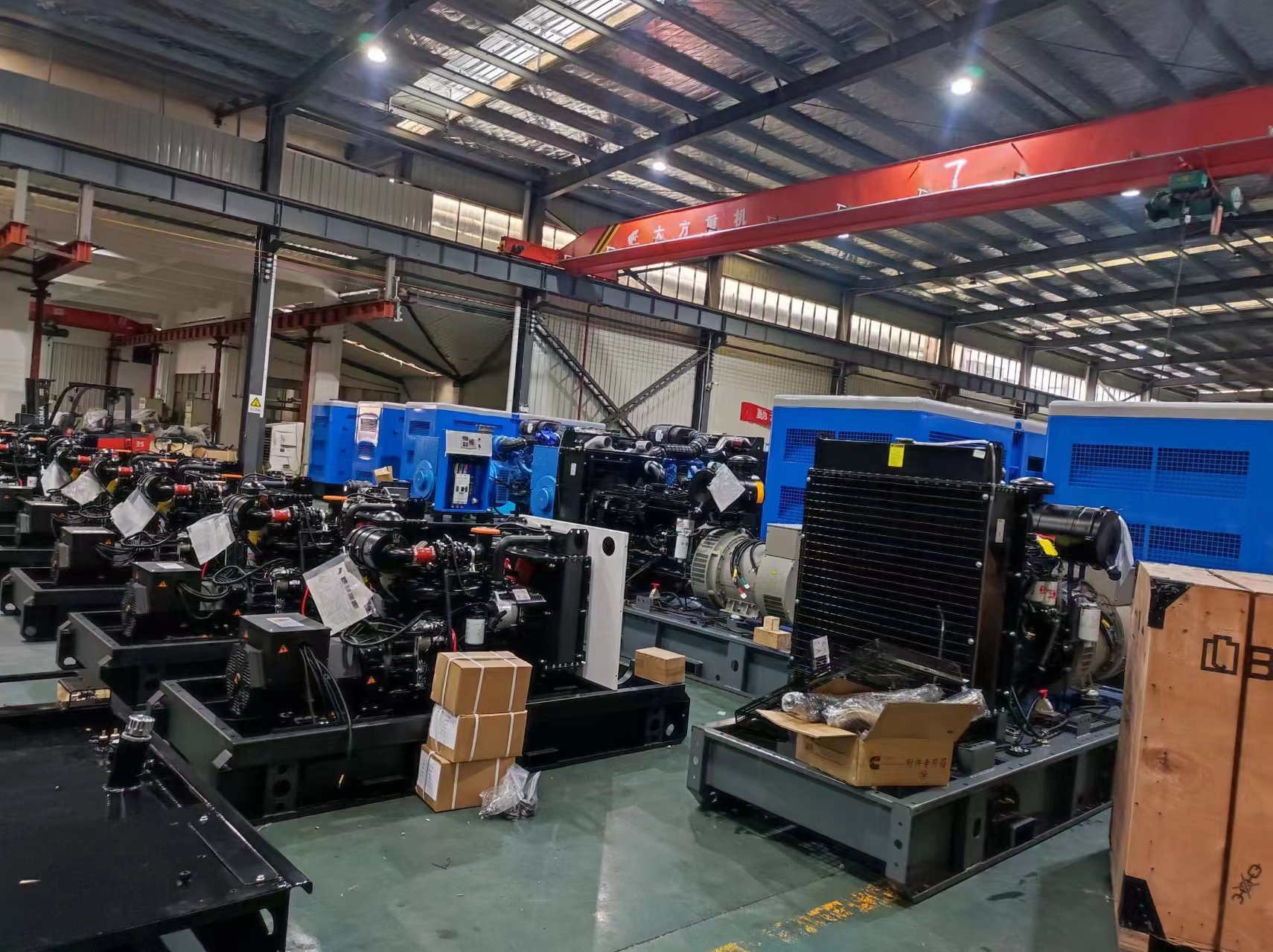
A diesel generator set typically consists of the following major auxiliary components:
1. Engine: As the core component of the generator set, the engine converts the chemical energy of fuel into mechanical energy to drive the generator for electricity production. The engine's performance directly impacts the overall efficiency and stability of the generator set.
2. Generator: The generator is the key device that converts the mechanical energy produced by the engine into electrical energy. Based on the principle of electromagnetic induction, the generator generates current through conductors on the rotor rotating within a magnetic field, thereby achieving energy conversion.
3. Control System: The control system is a vital component of the generator set. It monitors and regulates the operating status of both the engine and generator, ensuring stable and efficient operation under various working conditions. The control system typically includes the following components:
a. Start/Stop Control: Automatically initiates and terminates generator operation by managing engine start/stop sequences.
b. Voltage Regulation: Automatically adjusts generator output voltage based on load changes to maintain voltage stability.
c. Speed Regulation: Automatically adjusts engine speed in response to load variations to ensure frequency stability.
d. Protection Functions: Continuously monitors the generator set, promptly taking corrective actions upon detecting anomalies to prevent accidents.
4. Cooling System: Generators produce significant heat during operation. The cooling system dissipates this heat to prevent overheating. It typically includes components such as water pumps, radiators, and fans.
5. Lubrication System: To reduce wear on internal engine components and extend service life, the generator set requires a lubrication system. This system delivers lubricating oil to the engine interior, minimizing friction between parts and reducing wear.
6. Fuel System: The fuel system delivers diesel fuel to the engine combustion chamber for combustion, providing power to the engine. It typically includes components such as the fuel tank, fuel pump, and fuel filter.
7. Exhaust System: The exhaust system expels combustion byproducts from the engine, minimizing environmental impact. It generally includes components such as exhaust pipes and mufflers.
8. Battery: The battery supplies starting power to the generator set and provides power to control circuits during shutdown, ensuring normal electrical operation during startup and operation.
9. Engine Room Facilities: To ensure safe and stable operation, corresponding engine room facilities are required, such as soundproofing and noise reduction equipment, ventilation systems, and lighting installations.
In summary, diesel generator sets involve numerous supporting components that work together to guarantee efficient and stable operation. In practical applications, generator sets and their supporting equipment should be selected and configured appropriately based on actual requirements and site conditions.